Protection designed around your product
Combining advanced manufacturing, functionality, and protection, our moulded pulp packaging offers a fully recyclable solution that is cost-efficient and environmentally responsible.

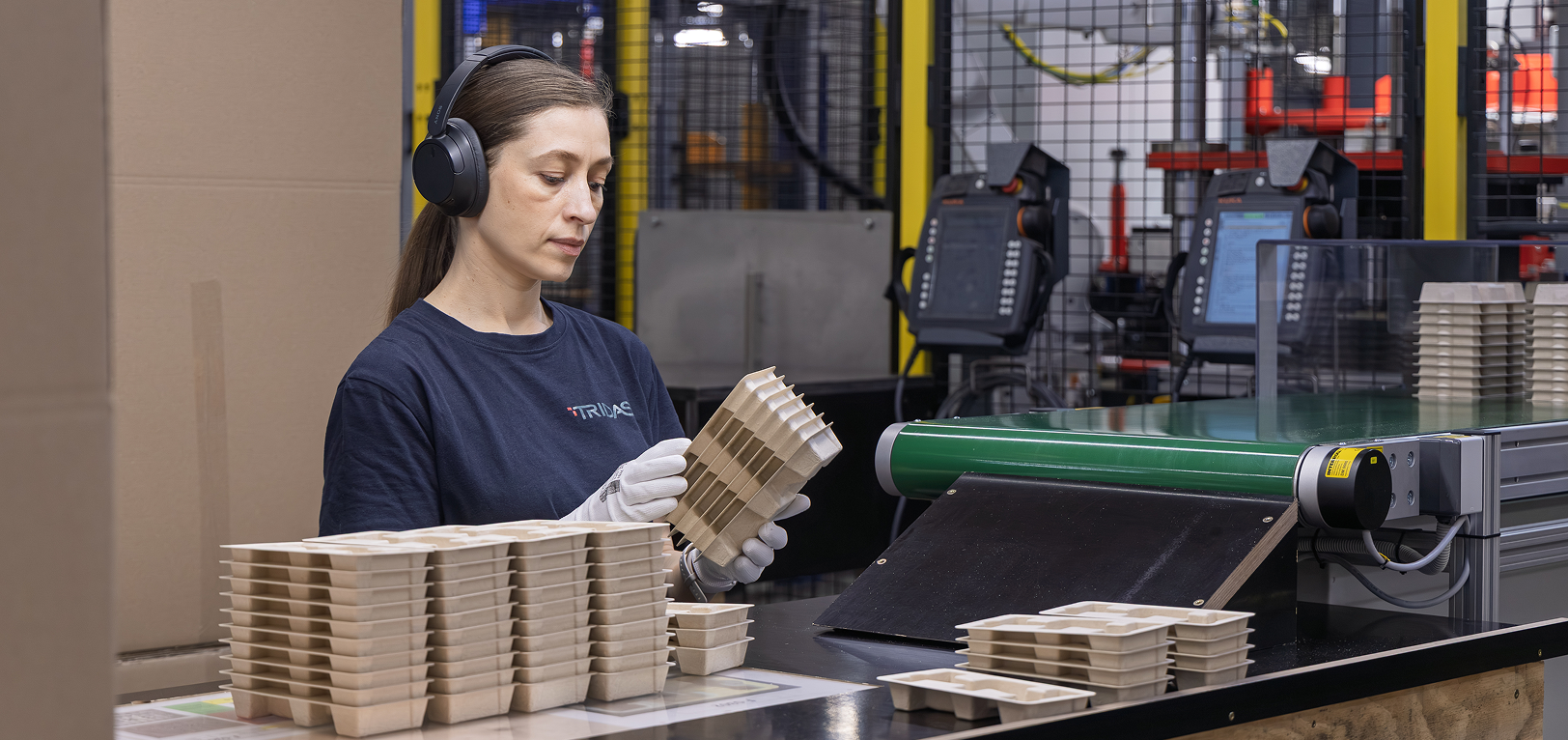
Combining advanced manufacturing, functionality, and protection, our moulded pulp packaging offers a fully recyclable solution that is cost-efficient and environmentally responsible.
A technology that has started as a basic food packaging has now turned into a trusted solution for electronics, automotive, and luxury goods. At Tridas, we are continually improving our production to offer our customers the best possible solution.
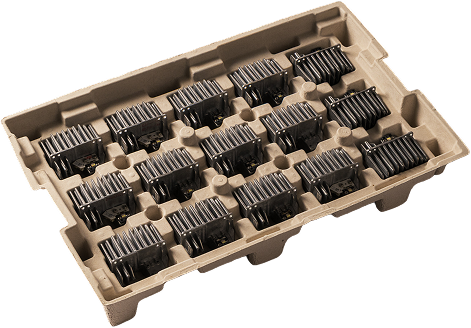
Recycled paper (cardboard, newspapers) undergoes defibering, filtration, forming and drying.
The product results in a durable solution designed to withstand even the industrial conditions. With dimensions up to 1200 × 1000 × 240 mm and a cutting accuracy of ±0.2 mm, it’s the idea choice for protecting technical components, headlights, or industrial parts.
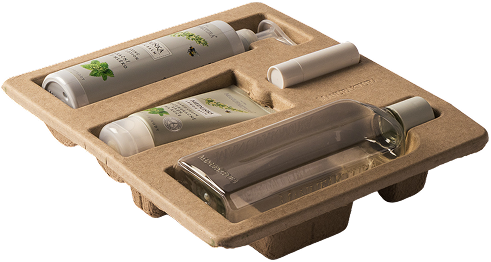
The virgin pulp undergoes defibration, filtration, and suction onto a mold. Pressing and drying occur simultaneously directly in the hot mold at 100 to 220 °C. The fully automated process concludes with precise, camera-controlled trimming.
This process creates a thin-walled package with a smooth surface on both sides ideal for stylish and luxurious packaging for cosmetics, electronics, and premium products. Available in natural brown, white, or black.

Every package is designed based on the product’s actual needs, its shape, fragility, and method of transport. Each design is approached individually rather than using a one-size-fits-all format.

Our manufacturing process utilizes recycled fibers and certified material. Our packaging is fully recyclable, compostable, and meets the requirements of the new European PPWR legislation.

Notonly do we look at the price of the packaging, but at the total cost. You’ll save on shipping, in storage, and on every complaint that is never made.

We design and manufacture. Our in-house development and production lines can shorten the time from the initial inquiry to the first production run to as short as 6 weeks.
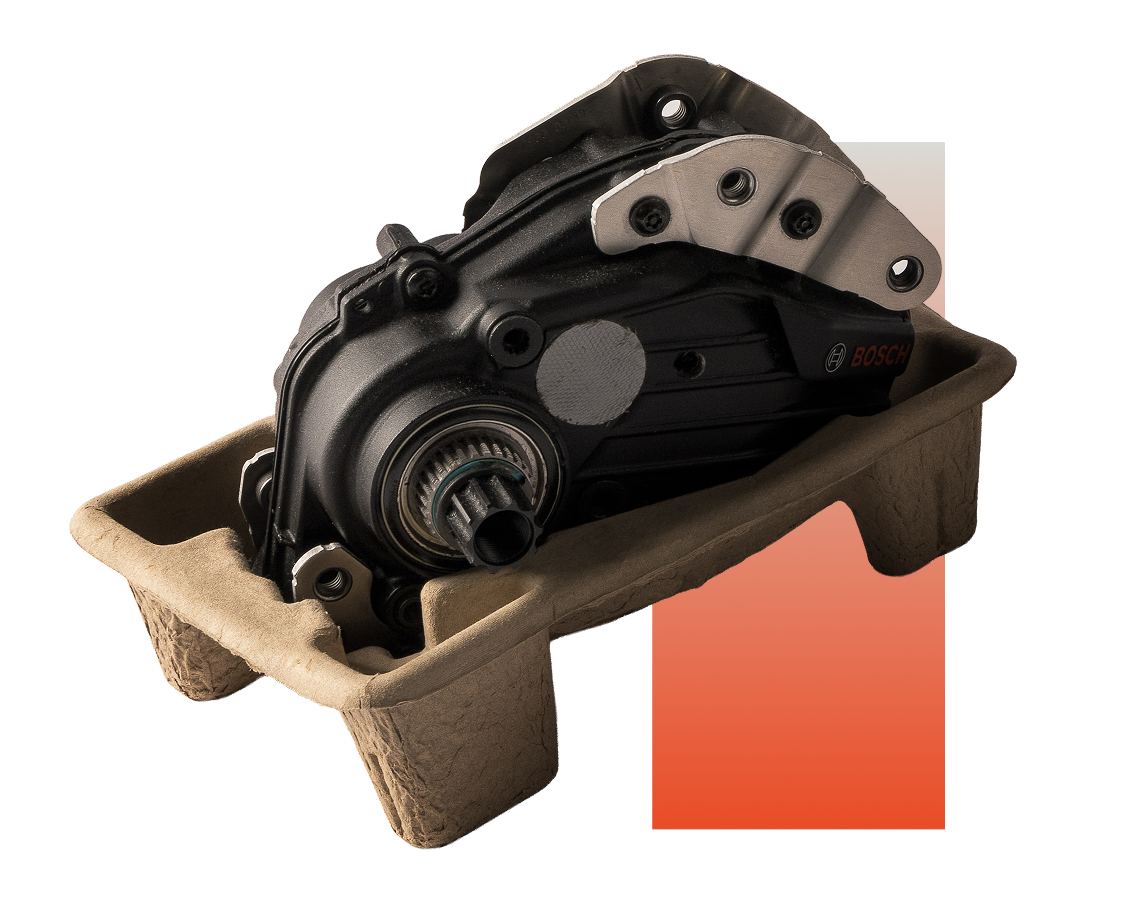
Moulded pulp is an ideal packaging solution for electronics that combines non-conductive properties with built-in shock absorption to protect sensitive products throughout the supply chain.
For light industrial applications, moulded pulp offers a level of flexibility that other materials struggle to match. It can be precisely shaped to the product, making it an ideal solution for furniture, textiles, glassware, and consumer goods.
Automotive packaging requires the same precision as its components. Our solutions ensure stable fixation even in automated processes, and can be used for production of LED lights, brake systems, and touchscreens.
Our agricultural solutions are designed with their full lifecycle in mind.These include biodegradable flower pots that safely decompose in soil, as well as functional trays for controlled breeding of beneficial insects.
Luxury and sustainability can go hand in hand. Our packaging proves that eco-friendly materials can still deliver a premium look and create a powerful brand impression upon unboxing.
Moulded pulp is not only packaging material—in design applications, it becomes a standalone element. It is sound absorbing, non-toxic and blends naturally into the environment.


There is no fixed number; it always depends on the specific project. As a rule, moulded pulp packaging is most efficient at medium to higher volumes. For a more accurate quantity estimate, send us your project specifications.
Yes, when properly designed, it performs just as well as plastic packaging. It is shaped precisely to hold the product securely in place, it absorbs shocks, and reduces the risk of damage during transport. Moulded pulp delivers reliable protection for even the most delicate products.
Yes. While the savings may not always be visible in the packaging price alone, they often become clear across the entire supply chain. Lower transport and storage costs, combined with reduced product damage, can significantly improve overall efficiency and reduce total costs.
The main mistake is applying plastic-based designs without adapting them to moulded pulp. This often overlooks key production constraints and logistics performance. Another is focusing on unit price instead of total cost. We support the transition step by step.
Yes. The new European PPWR framework raises expectations for recyclability, material efficiency, and environmental impact. From the earliest design stage, we help you develop solutions that meet these requirements, optimizing structure, reducing excess volume, and selecting the right materials for both present and future compliance.
Reach out by phone or email. We’d be happy to discuss custom packaging options with you.